

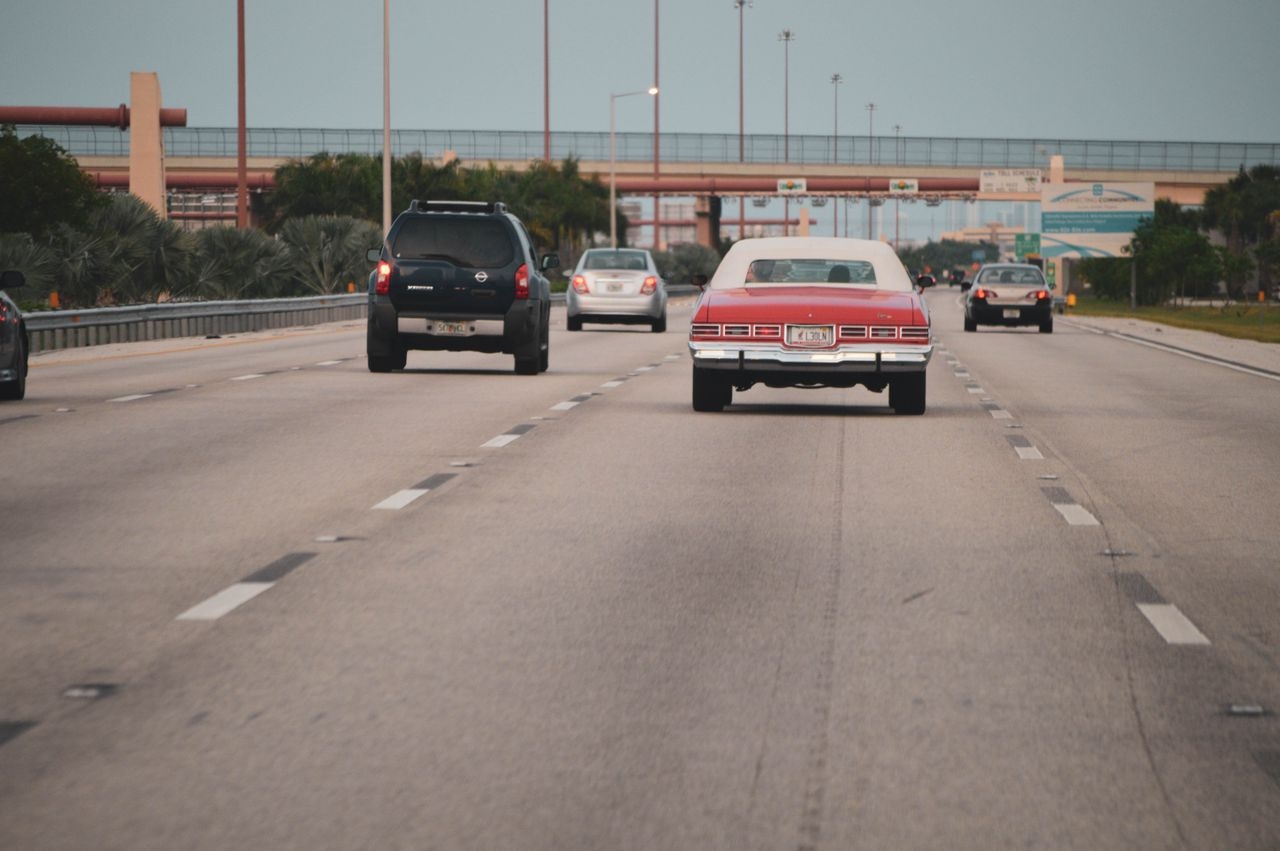
You are involved in a crash in Fort Lauderdale. When you exchange information with the other driver, you notice something immediately: their driver's license, license plate, or insurance policy is from another state.
Maybe they are visiting Florida for vacation. Maybe they spend part of the year here. Maybe they were driving through South Florida on their way somewhere else.
Now you are left wondering whether their home state changes your ability to pursue an injury claim.
An out-of-state driver can add questions about insurance, coverage, and where a claim can be pursued, but living in another state does not change the basic need to determine who was responsible for the crash.
The important questions are how the collision happened, what insurance coverage applies, who owns the vehicle, and what damages resulted.
Does an Out-of-State Driver Still Have to Follow Florida Traffic Laws?
Yes.
Someone driving through South Florida does not get a different set of traffic rules because their license was issued in New York, New Jersey, Georgia, or another state.
If the crash happens in Florida, the driver's conduct on the road is generally evaluated under Florida traffic laws and the circumstances surrounding the collision.
That can matter in a region with a large number of visitors and seasonal residents.
A driver unfamiliar with I-95 through Broward County may make an abrupt lane change after missing an exit. Someone navigating unfamiliar streets in Fort Lauderdale could turn unexpectedly while following GPS directions. A visitor could misjudge traffic while entering US-1 or another busy South Florida road.
Being unfamiliar with the area does not automatically make that person negligent. But it also does not excuse unsafe driving.
The facts surrounding the collision still determine responsibility.
Will the Other Driver's Out-of-State Insurance Cover a Florida Accident?
An out-of-state auto policy can still be relevant after a Florida crash, but the policy terms, coverage limits, exclusions, and applicable law need to be reviewed to determine what coverage is available.
However, you should not assume that the coverage will look exactly like a Florida policy.
States have different minimum insurance requirements. Drivers can also purchase different types and amounts of coverage beyond those minimums.
That means two drivers involved in the same Broward County crash could have insurance policies structured very differently.
After an accident with an out-of-state motorist, important questions can include:
- Who insured the driver?
- Who owned the vehicle?
- What bodily injury liability coverage is available?
- Was the driver using a borrowed or rented vehicle?
- Does another policy potentially provide coverage?
- Do you have uninsured or underinsured motorist coverage that could become relevant?
The answers can determine which insurance policies are available to respond to the claim and what coverage limits apply.
What About Your Own Florida PIP Coverage?
The other driver's state of residence does not eliminate Florida's no-fault insurance considerations.
If you have applicable personal injury protection (PIP) coverage, it can provide certain medical and disability benefits after a motor vehicle accident without first requiring you to prove that the other driver caused the crash.
Under Florida's current PIP statute, covered medical benefits are subject to specific requirements, including obtaining initial medical services and care within 14 days after the accident.
PIP does not necessarily cover all of the losses caused by a serious crash.
Depending on the circumstances, an injured person may have medical expenses, lost income, or other damages that extend beyond available no-fault benefits.
Whether additional compensation can be pursued depends on the injuries, who was responsible for the crash, available insurance, and applicable Florida law. Recovering damages for pain and suffering may also require meeting Florida's statutory injury threshold.
An out-of-state driver's liability coverage can therefore remain important even when you have your own Florida insurance.
Do You Have to Pursue the Driver in Their Home State?
Not simply because the driver went home after the accident.
Florida law specifically addresses nonresident motorists involved in crashes here. Florida Statutes § 48.171 provides a method for service of process on certain nonresident vehicle owners and operators in civil actions arising from accidents or collisions occurring within Florida.
Returning home after the crash does not, by itself, prevent a Florida claim from being pursued against a nonresident driver.
That does not mean every accident involving a nonresident automatically belongs in a Florida court or that jurisdiction and service questions are identical in every case. Those issues can depend on the parties and circumstances involved.
But the driver's residence alone should not lead an injured person to assume that pursuing a claim in Florida is impossible.
What If the Driver Was Using a Rental Car?
A rental vehicle adds another layer.
South Florida's tourism industry means rental cars are common on roads throughout Fort Lauderdale, Broward County, Miami-Dade County, and Palm Beach County.
If the other driver was using a rental vehicle, several different sources of coverage may need to be examined.
The driver's personal auto policy may be relevant. The driver may have purchased optional rental-car coverage. Other contractual or insurance arrangements may also need to be reviewed.
The fact that a rental company owns the vehicle does not automatically make the company responsible for the driver's negligence. Federal law generally limits a rental company's liability when the claim is based solely on its ownership of the vehicle, although that protection does not eliminate potential claims based on the rental company's own negligence. Florida law can also affect which insurance is primary.
For an injured person, the immediate priority is preserving the driver's information, the vehicle information, and any available rental documentation rather than trying to determine coverage at the roadside.
What If the Out-of-State Driver Has Too Little Insurance?
Even when the other driver has valid insurance, the available liability limits may not be enough to address the losses caused by a serious crash.
If the other driver has no bodily injury liability insurance or their available coverage is insufficient to address your losses, your own uninsured or underinsured motorist coverage may become important.
Florida law generally requires UM coverage to be included with certain policies that provide bodily injury liability coverage unless the named insured rejects that coverage in writing or selects lower limits as permitted by law.
Whether UM or UIM coverage applies to a particular accident depends on the policy and the facts.
Other potentially applicable coverage should also be investigated before assuming that the limits shown on one insurance card are the only coverage relevant to the claim.
At Feingold, Posner & Draizin, our attorneys' prior insurance-side and insurance-defense experience helps us anticipate the coverage and liability questions insurers examine in accident claims. When an out-of-state driver is involved, that includes identifying which policies apply, who insured the vehicle, and what evidence supports the claim.
What Evidence Matters When the Other Driver Lives Far Away?
The driver's departure from Florida can make early evidence preservation especially important.
Start with information that identifies both the person and the vehicle.
Photograph the driver's license, insurance information, license plate, vehicle damage, and accident scene if you can do so safely. Make sure law enforcement has been contacted when required, and obtain information from anyone who witnessed the collision.
Other potentially useful evidence can include:
- Dashcam footage
- Traffic or surveillance video
- Photographs of lane markings and traffic signals
- Witness statements
- Vehicle ownership information
- The crash report
- Medical records documenting your injuries
If a dispute later develops over who changed lanes, who had the right of way, or what happened at an intersection, evidence created near the time of the accident can be substantially more useful than relying only on competing memories months later.
Hit by an Out-of-State Driver in South Florida?
Seeing another state's license plate after a crash can make an already stressful situation feel more complicated.
But the driver's home address is only one part of the claim.
What matters most is how the accident occurred, what Florida law requires, what insurance policies apply, and what evidence supports your injuries and losses.
If you were injured by an out-of-state driver in Fort Lauderdale, Plantation, Broward County, or elsewhere in South Florida, Feingold, Posner & Draizin can review how the crash happened, identify potentially applicable insurance coverage, and explain your legal options.
Contact our office to discuss what happened and learn what steps may be appropriate for your situation.
Disclaimer: The articles on this blog are for informational purposes only and are no substitute for legal advice or an attorney-client relationship. If you are seeking legal advice, please contact our law firm directly.